Open Source | 2026 — Present
Bridger — Claude Code Session Bridge
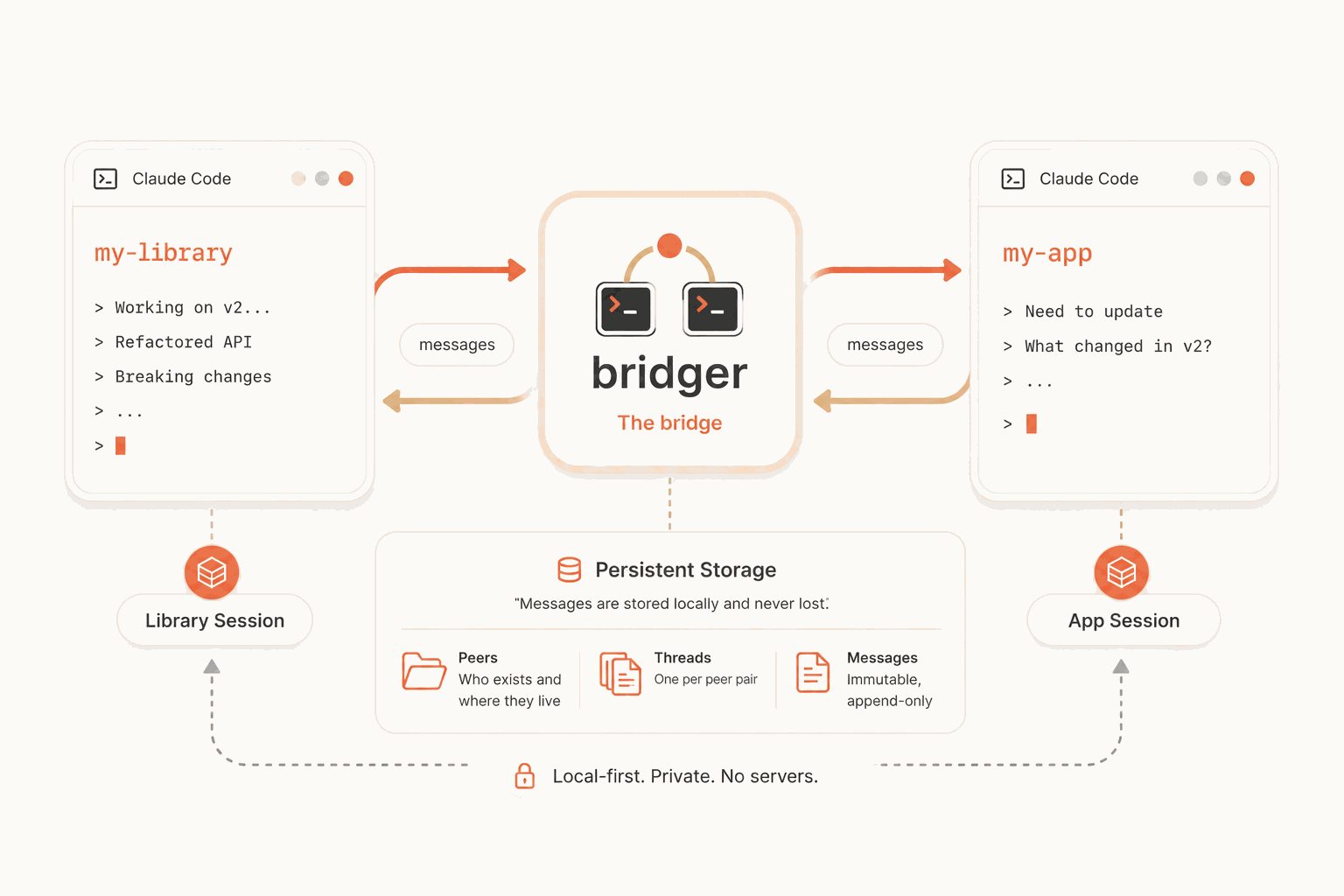
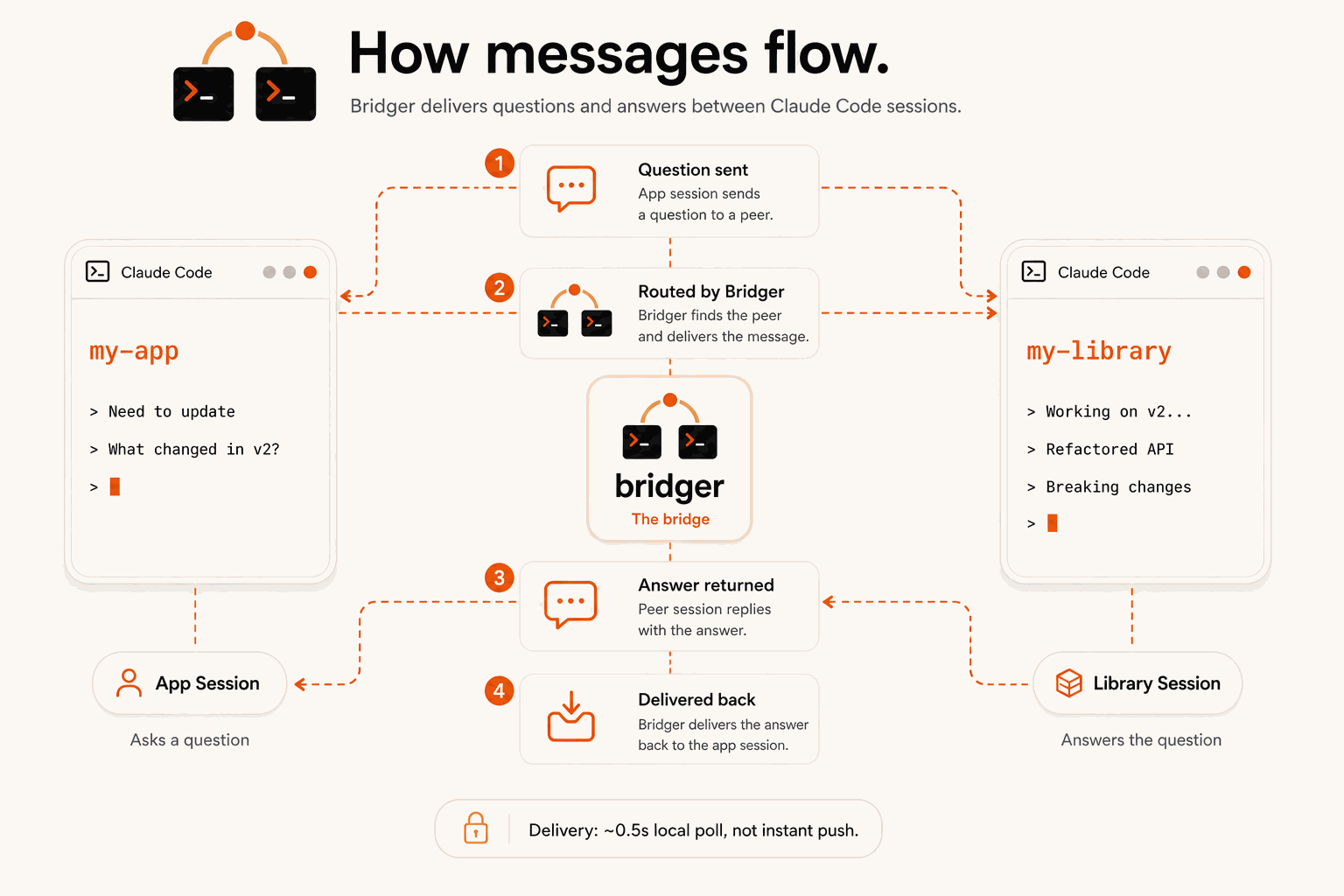
Bridger connects multiple Claude Code sessions on the same machine as named peers. Sessions can discover each other, ask questions, send messages, and receive replies from the session that actually owns the relevant context. Messages are stored as immutable, append-only local files, so conversations survive restarts and can be inspected or mirrored later.
- Bash
- jq
- Python
- Claude Code
Bridger lets Claude Code sessions share live context without copy-paste, while keeping the communication local, asynchronous, and durable.
The problem
When multiple Claude Code sessions work on related code, one session often knows something another needs. Git diffs show what changed but not always why, and moving that reasoning between sessions means copy-pasting context and re-explaining it.
The solution
Bridger gives sessions named peer identities and a local file-based message bus. A session can ask another peer directly, and the peer answers from its own live context. Messages queue while a peer is offline and remain available as an immutable conversation history.
Architecture
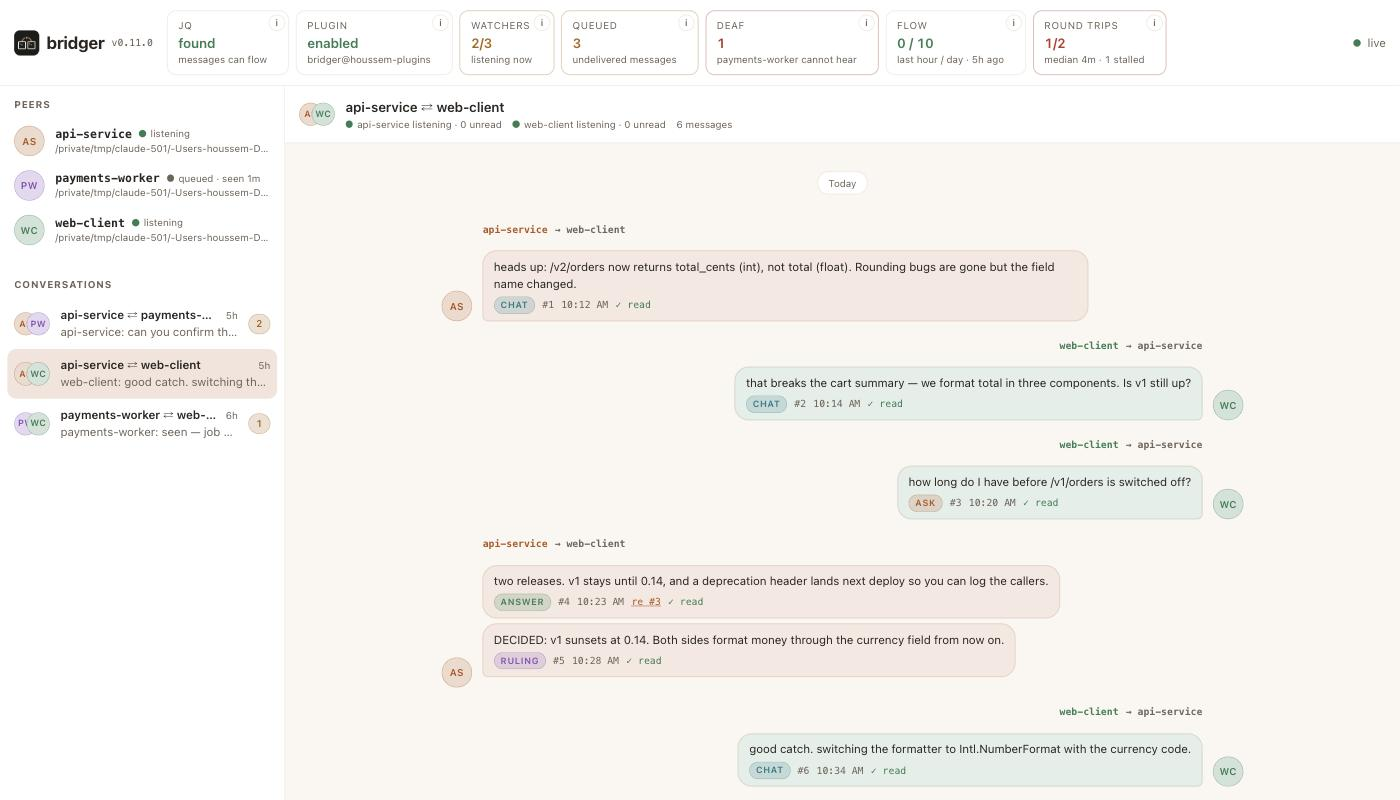
The plugin uses plain JSON files under ~/.claude/bridger/ rather than a server or network service. Bash and jq handle the core messaging workflow, while the monitor provides a read-only local browser view.
My role
I designed and built Bridger as an open-source Claude Code plugin, including the peer registration and messaging model, local delivery and persistence, hooks, CLI commands, monitoring interface, and plugin packaging.
Want the full story behind this project?
houssem.djeghri@gmail.com