Case Study | 2020 — 2025
BRIDGR — Client Evaluation Platform
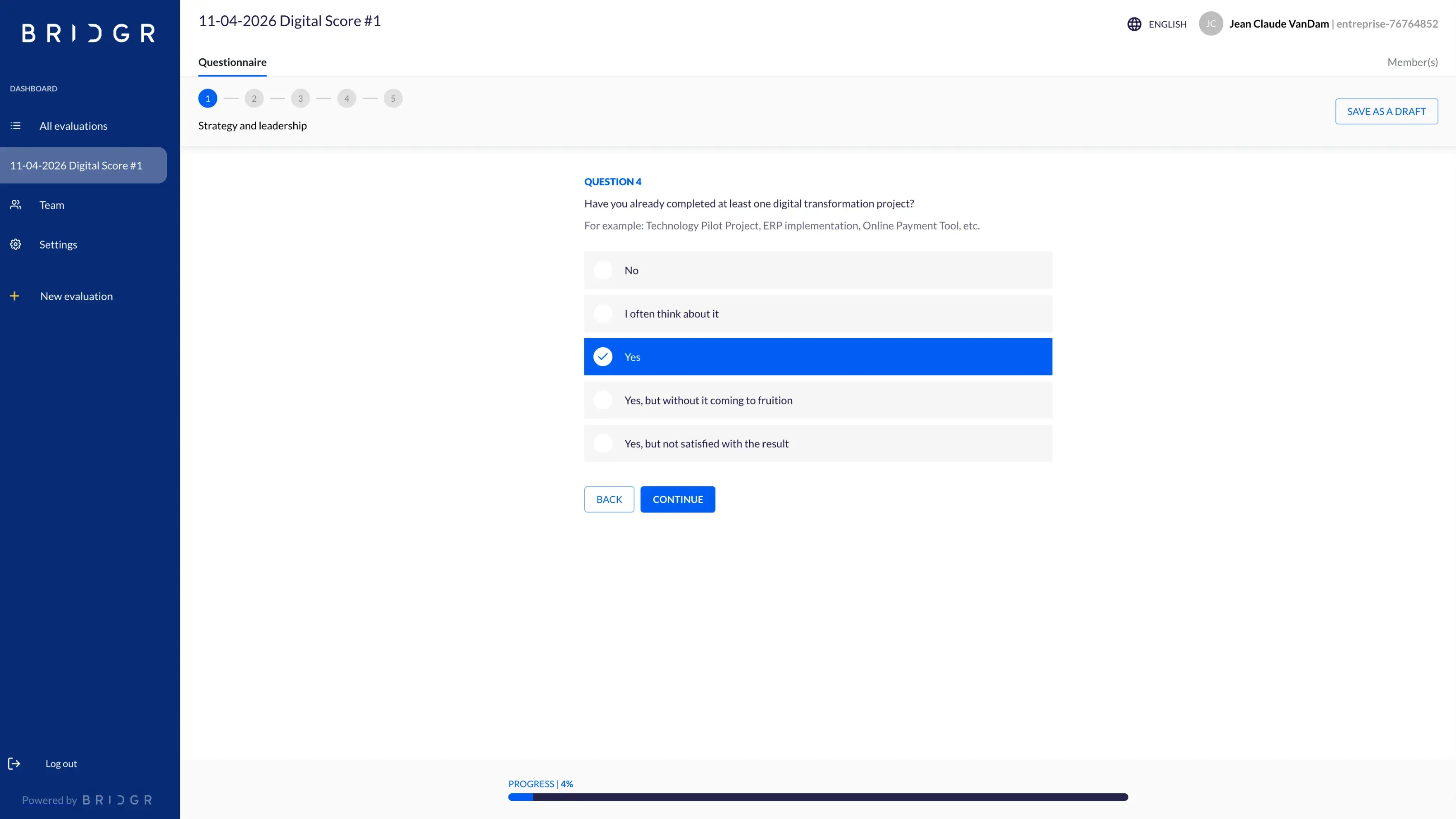
BRIDGR digitizes the client evaluation process for consultants: automated assessments replace paper-based workflows, a scoring system rates each client, and an analytics dashboard with exportable reports supports decision making. I introduced AI in two targeted places — summarizing client answers for consultants, and drafting recommendations they review before sending.
- TypeScript
- React
- Node.js
- PostgreSQL
- Stripe
- Vertex AI
- Gemini
- CI/CD
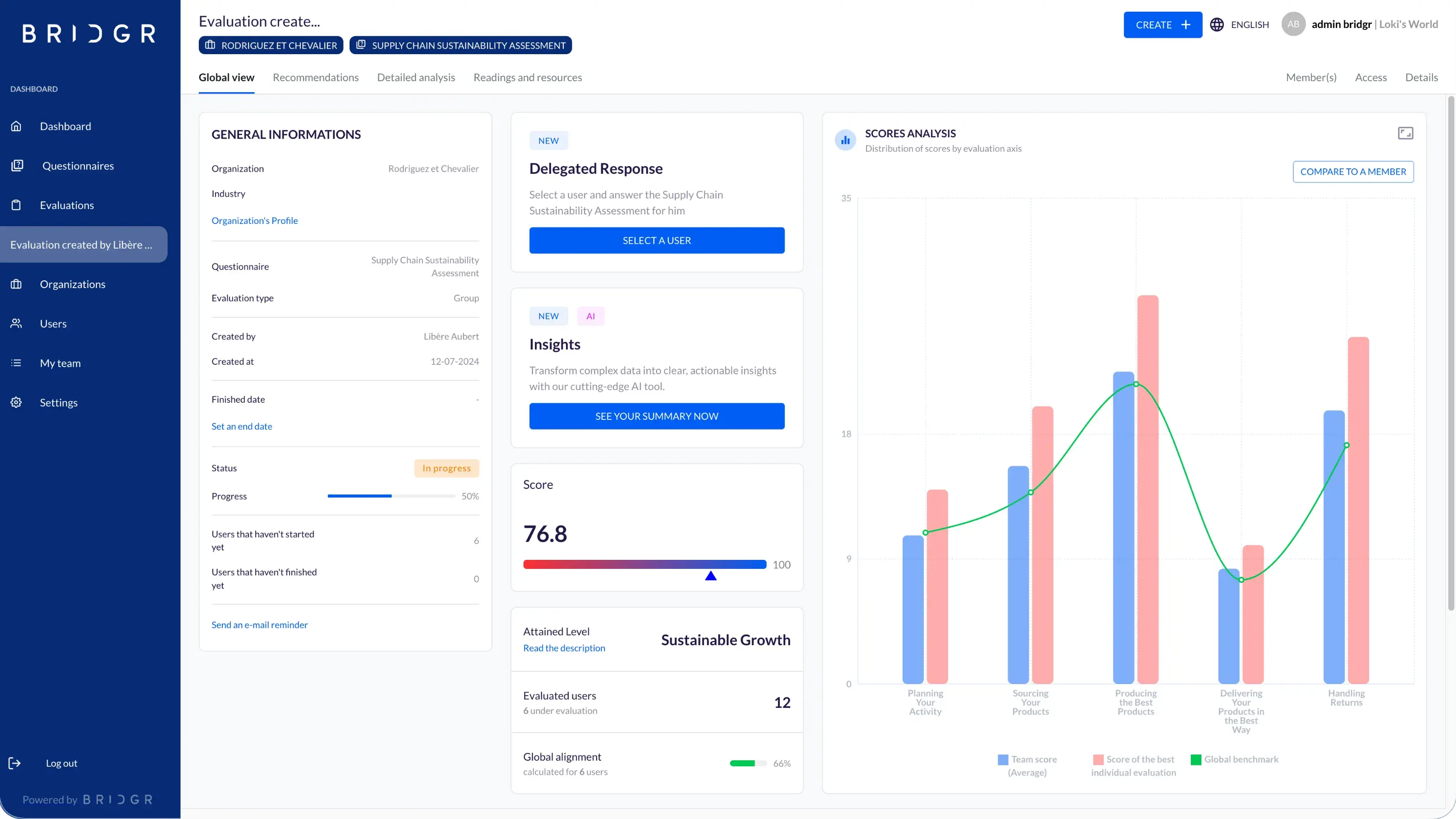
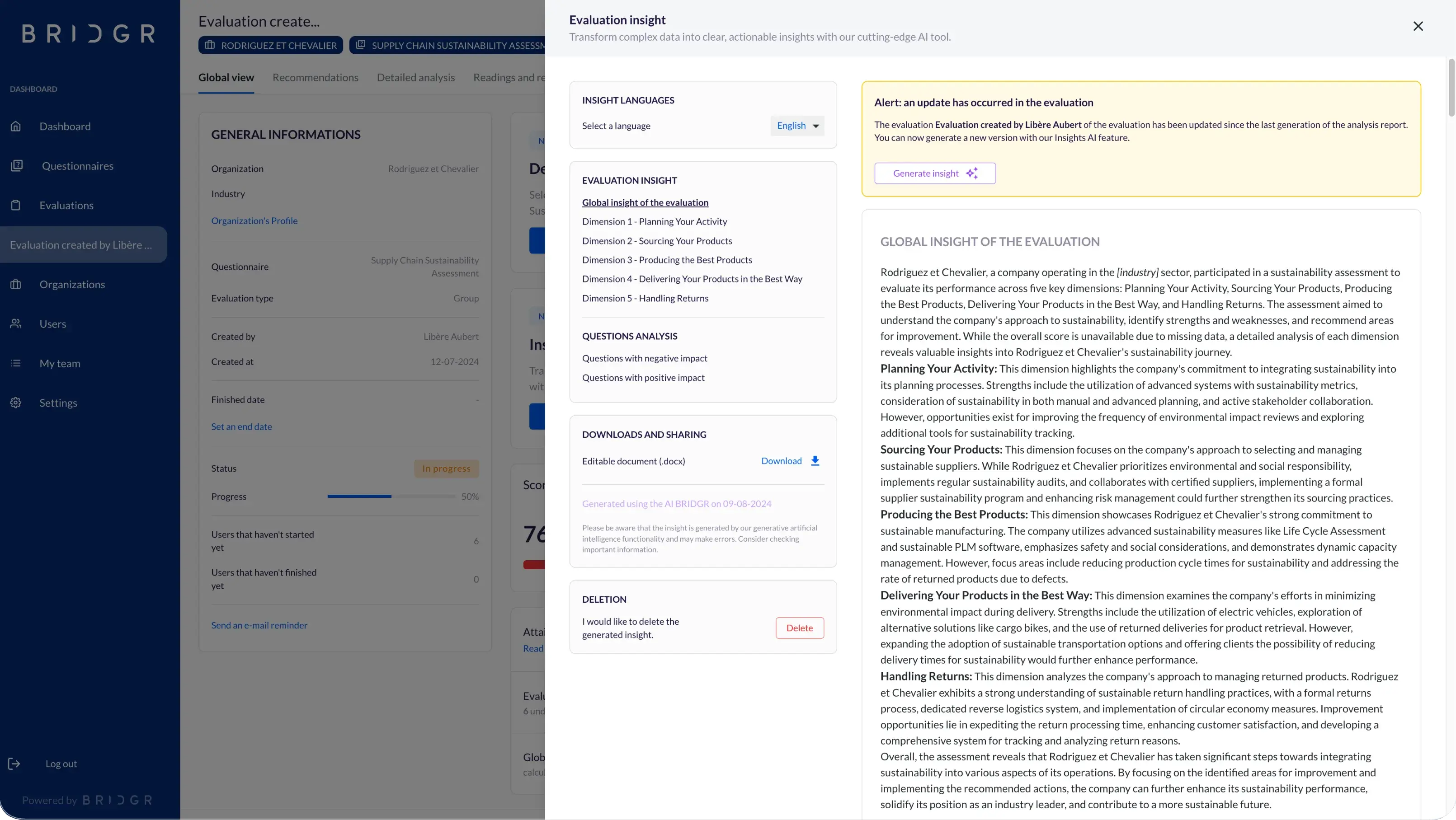
AI features cut the time consultants spend per client by an estimated 80%, based on before/after observation.
The problem
Consulting firms evaluated clients through a manual, largely paper-based process: collecting answers, reading through every submission, scoring by hand, and writing recommendations from scratch or from memory. Each client took hours of repetitive work before the consultant could get to the judgment calls that actually needed their expertise.
The platform
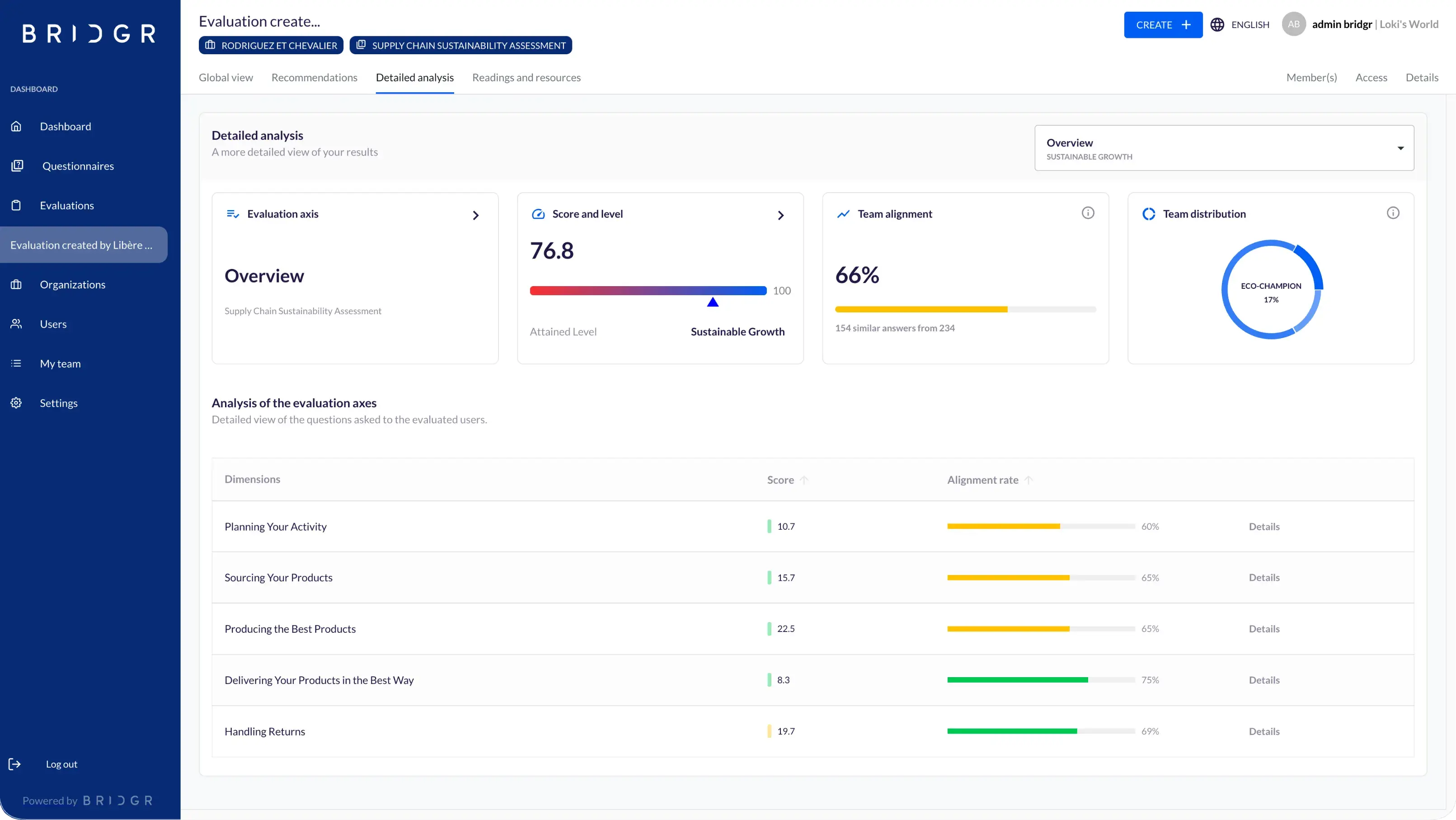
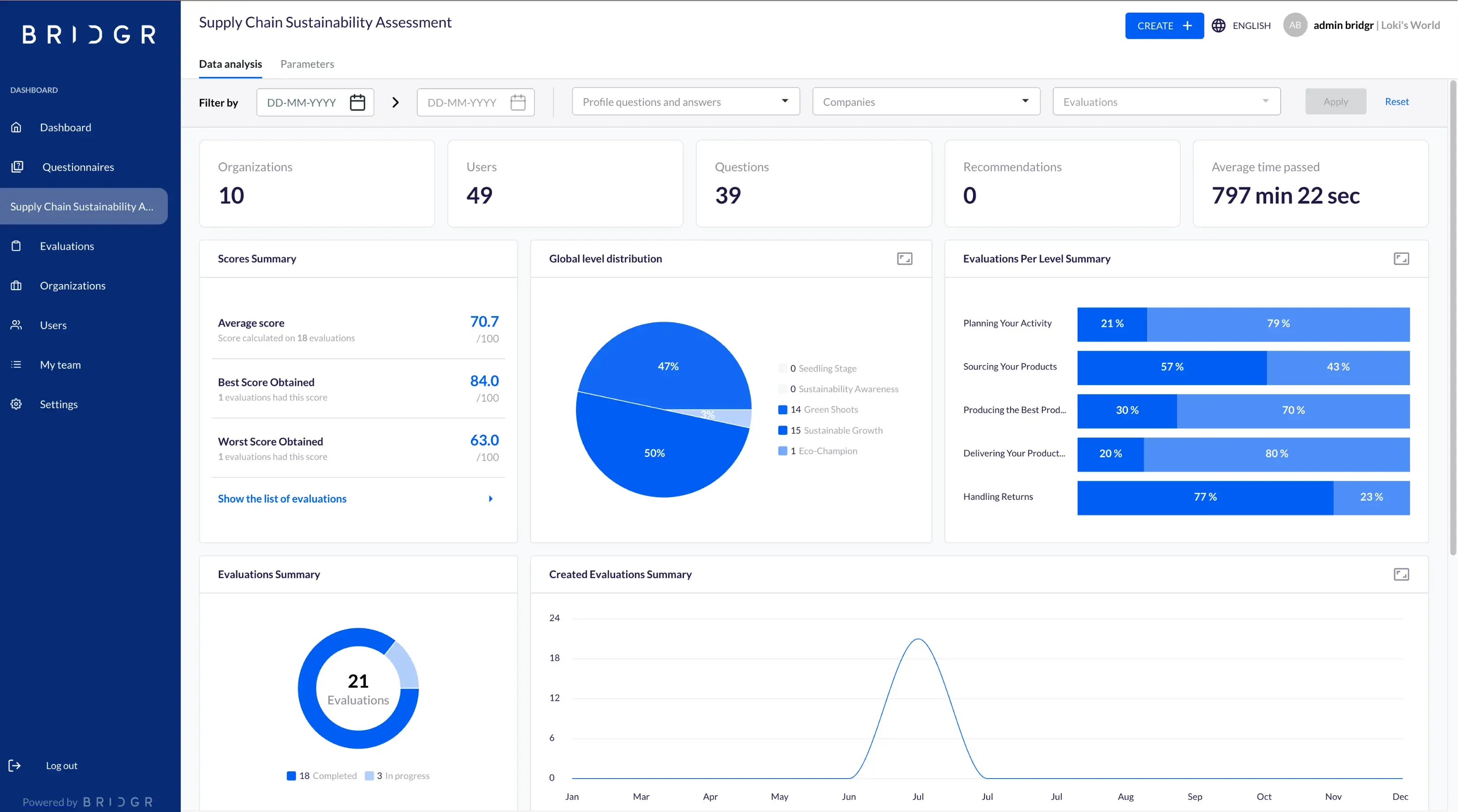
BRIDGR digitizes and automates the assessment phase end to end. Clients complete structured evaluations online; a scoring system rates them against defined criteria; and a detailed analytics dashboard surfaces the metrics consultants need for decision making, with exportable reports for stakeholders.
A recommendation engine then defines and generates recommendations for each client, closing the loop from assessment to actionable advice.
AI, in two deliberate places
Rather than sprinkling AI across the product, we introduced it where it removed the most manual work. First, evaluation: the AI reads a client's submitted answers and produces a concise summary, replacing the consultant's manual read-through of every response. Second, recommendations: the AI generates a draft recommendation from the summary and the client's stats. The consultant reviews and edits that draft before anything reaches the client — it is a starting point, never an auto-send.
I owned the architecture of the AI feature implementation end to end, integrating LLM capabilities via Vertex AI into the existing platform.
My role
Senior Software Engineer on a remote team (Montreal-based company, 2020–2025). Beyond the AI work, I designed and scaled SaaS features — dashboards, RESTful APIs — owned frontend and backend architecture on a number of tasks, and mentored and led two developers through code reviews, CI/CD implementation, and sprint planning.
Outcome
The AI features cut the time consultants spend completing all phases with one client by an estimated 80% — an observed estimate from comparing time-to-complete before and after the features shipped, not a formally instrumented metric. The summarization and drafting features were adopted into consultants' daily workflows.
Want the full story behind this project?
houssem.djeghri@gmail.com